DOT Tire Regulations for Commercial Vehicles
Updated June 2026
If you operate a commercial vehicle in Nebraska or anywhere in the U.S., understanding DOT tire regulations isn’t optional — it’s the law. The U.S. Department of Transportation (DOT) and Federal Motor Carrier Safety Administration (FMCSA) set and enforce these standards. Violations can result in vehicles being placed out of service, costly fines, and — most importantly — put lives at risk.
This guide covers the current federal tire and wheel regulations under 49 CFR Part 393, explains what they mean in plain language, and gives you practical tips to stay compliant. If you run a fleet or drive commercially in the Lincoln area, bookmark this page.
Tread Depth Quick Reference
Before diving into the full regulation text, here are the tread depth minimums every commercial driver needs to know:
| Tire position | Min. tread depth | What to know |
|---|---|---|
| Steer (front) axle | 4/32″ | Measured at any point in a major tread groove; most critical axle — drives steering response |
| Drive axles | 2/32″ | Measured in a major tread groove; applies to all drive positions |
| Trailer tires | 2/32″ | Same minimum as drive tires; often overlooked during pre-trip |
| All positions | Zero tolerance | No exposed ply or belt material, no tread or sidewall separation, no flat tires or audible leaks |
Measurement note: do not measure at tie bars, humps, or fillets — major groove only. Per 49 CFR § 393.75.
DOT Tire Regulations
The following information regarding tires is pulled directly from section 393.75 of Title 49 Code of Federal Regulations. This section has been reviewed and is current as of March 2026:
(a) General Tire Condition
No motor vehicle shall be operated that:
- Has body ply or belt material exposed through the tread or sidewall,
- Has any tread or sidewall separation,
- Is flat or has an audible leak, or
- Has a cut to the extent that the ply or belt material is exposed.
(b) Steer/Front Axle Tread Depth
Any tire on the front wheels of a bus, truck, or truck tractor shall have a tread groove pattern depth of at least 4⁄32 of an inch when measured at any point on a major tread groove. The measurements shall not be made where tie bars, humps, or fillets are located.
(c) Drive & Trailer Tread Depth
Tires shall have a tread groove pattern depth of at least 2⁄32 of an inch when measured in a major tread groove. The measurement shall not be made where tie bars, humps or fillets are located.
(d) Buses – Regrooved/Retreaded Tires
No bus shall be operated with regrooved, recapped or retreaded tires on the front wheels.
(e) Regrooved Tires on Trucks
A regrooved tire with a load-carrying capacity equal to or greater than 2,232 kg (4,920 pounds) shall not be used on the front wheels of any truck or truck tractor.
(f) Speed-Restricted Tires
No motor vehicle may be operated with speed-restricted tires labeled with a maximum speed of 55 mph or less in accordance with S6.5(e) of FMVSS No. 119 at speeds that exceed the rated limit of the tire.
(g) Tire Loading Restrictions
No motor vehicle shall be operated with tires that carry a weight greater than that marked on the sidewall of the tire or, in the absence of such a marking, a weight greater than that specified for the tires in any of the publications of any of the organizations listed in Federal Motor Vehicle Safety Standard No. 119 unless:
- The vehicle is being operated under the terms of a special permit issued by the State; and
- The vehicle is being operated at a reduced speed to compensate for the tire loading in excess of the manufacturer’s rated capacity for the tire. In no case shall the speed exceed 80 km/hr (50 mph).
(h) Tire Loading Restrictions – Manufactured Homes
Built before January 1, 2002: Must not be transported on tires loaded more than 18% over the sidewall load rating. Homes transported on tires overloaded by 9% or more must not exceed 80 km/hr (50 mph).
Built on or after January 1, 2002: Must not be transported on tires loaded beyond the sidewall load rating.
(i) Tire Inflation Pressure
- No motor vehicle shall be operated on a tire which has a cold inflation pressure less than that specified for the load being carried.
- If the inflation pressure of the tire has been increased by heat because of the recent operation of the vehicle, the cold inflation pressure shall be estimated by subtracting the inflation buildup factor from the measured inflation pressure.
Key Takeaways from Section 393.75
- Steer/front tires: minimum 4/32″ tread depth at any point in a major groove.
- Drive and trailer tires: minimum 2/32″ tread depth.
- Zero tolerance for exposed ply/belt material, sidewall separation, flat tires, or audible leaks.
- Regrooved tires rated 4,920 lbs or more CANNOT be used on steer axles.
- Speed-restricted tires must never operate above their rated speed limit.
- Load ratings on sidewalls are the legal maximum — no exceptions without a state permit.
- Cold inflation pressure must meet load requirements. Adjust for heat buildup after highway running.
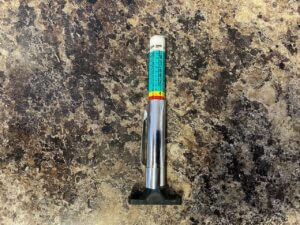
A simple tread depth gauge goes a long way toward keeping you compliant. Keep one in your cab or service kit — it’s a 5-second check that can prevent a costly roadside inspection violation.
The numbers don’t lie: 511 fatalities were attributed to tire-related crashes in 2024 according to NHTSA data. That’s over 10 lives every week. Proper maintenance keeps you, your drivers, and everyone else on Nebraska’s roads safer.
Beyond safety, consistent tire maintenance protects your bottom line. Uneven wear patterns often signal suspension or alignment problems before they become expensive repairs. Catching a slow leak or low tread on your next pre-trip beats a blowout on I-80.
DOT Wheel Regulations
Tires are only as safe as the wheels they’re mounted on. The following regulations come from section 393.205 of Title 49 Code of Federal Regulations:
(a) Wheels and rims shall not be cracked or broken.
(b) Stud or bolt holes on the wheels shall not be elongated (out of round).
(c) Nuts or bolts shall not be missing or loose.
These rules are straightforward but critical. A cracked rim or a loose lug nut can cause wheel separation at highway speed — a catastrophic failure. During any tire inspection, your technician should also be checking wheel and rim condition.
When to Inspect Wheels
- At every tire rotation or tire swap
- Any time a tire is mounted or dismounted
- After impact events (hitting a curb, pothole, or road debris)
- As part of your standard pre-trip inspection routine
- Any time a vehicle comes in for service — a quick visual takes seconds
Commercial Driver Pre-Trip Tire Inspection Checklist
FMCSA regulations require drivers to inspect their vehicles before each trip. Here’s a tire-focused checklist your drivers can run through in under five minutes:
| Check item | What to look for / minimum standard | |
|---|---|---|
| Tread depth — steer axle | At least 4/32″ in all major grooves | |
| Tread depth — drive/trailer | At least 2/32″ in all major grooves | |
| Visual tread inspection | No exposed cords, ply, or belt material | |
| Sidewall condition | No cuts, bulges, separations, or cracks | |
| Inflation — visual | No visibly flat or sagging tires | |
| Inflation — audible | No audible air leaks | |
| Valve stems & caps | Present, intact, and free of damage | |
| Wheels & rims | No visible cracks; no wobble | |
| Lug nuts / studs | All present; no visible looseness; check for rust streaks indicating looseness | |
| Tire matching (drives) | Dual tires should be matched in size and inflation |
Pro tip: keep a tread depth gauge and tire pressure gauge in every cab. Per FMCSA, a pre-trip inspection is required before every run.
Common Violations and What They Can Cost
FMCSA inspections can happen at weigh stations, ports of entry, or roadside. Tire violations are among the most common reasons vehicles are placed out of service. Here’s a general overview of what inspectors look for and the potential consequences:
| Violation | Potential consequence |
|---|---|
| Tread depth below 2/32″ (drive/trailer axle) | Out-of-service order Civil penalties |
| Tread depth below 4/32″ (steer axle) | Out-of-service order Civil penalties |
| Exposed ply or belt material | Immediate out-of-service order |
| Flat tire or audible leak | Immediate out-of-service order |
| Tire loaded beyond sidewall rating | Out-of-service order Overweight penalties |
| Speed-restricted tire operating above rated limit | Civil penalty Potential crash liability |
| Missing or loose lug nuts | Out-of-service order |
| Cracked or broken wheel/rim | Out-of-service order |
Civil penalties for FMCSA violations can reach thousands of dollars per violation per day. Consult fmcsa.dot.gov for current penalty schedules.
Frequently Asked Questions:
What is the minimum tread depth for commercial truck tires?
Front (steer) tires must have at least 4/32″ of tread depth. Drive and trailer tires must have at least 2/32″. These are the federal minimums — your fleet policy may require more conservative replacement thresholds for safety and tire longevity.
Can I run retreaded tires on a commercial truck?
Yes, with one important exception: retreaded tires with a load capacity of 4,920 lbs or more cannot be used on steer (front) axles of trucks or truck tractors. Retreads are permitted on drive and trailer positions. Buses are additionally prohibited from running regrooved, recapped, or retreaded tires on front wheels at all.
How often should commercial truck tires be inspected?
FMCSA requires a pre-trip inspection before every run. At minimum, a thorough inspection with a tread depth gauge should occur at every fuel stop on long hauls, and a professional inspection is recommended every time tires are rotated or swapped. For high-mileage operations, many fleets inspect tires every 10,000–15,000 miles.
What happens if my tires are out of compliance at a weigh station?
A DOT inspector can place your vehicle out of service on the spot, meaning you cannot move it until the violation is corrected. Depending on the severity and the carrier’s history, civil penalties may also be assessed. Consistent violations can affect your carrier safety rating.
Does Take Off Tire service commercial and fleet vehicles?
Yes — commercial, OTR, and fleet tire service is our specialty. We carry tires for semi trucks, trailers, medium-duty commercial vehicles, vans, and more. Our team can help you stay DOT-compliant and get back on the road fast. Call us at 402-413-6646 or stop by our Lincoln, NE shop.
DOT Compliance on Nebraska Roads
Nebraska sits at the crossroads of the country — a critical corridor for commercial freight moving between coasts. I-80 sees heavy commercial traffic year-round, and Nebraska State Patrol regularly partners with FMCSA on roadside inspection initiatives. Ports of entry on Nebraska’s borders are active inspection points.
Nebraska winters add an extra layer of concern. Cold temperatures reduce tire pressure (roughly 1 PSI for every 10°F drop), which means a tire that was properly inflated in the fall can be underinflated by spring pre-trip. Build a seasonal inflation check into your fleet maintenance schedule.
At Take Off Tire in Lincoln, we work with local fleets, owner-operators, and commercial carriers every day. If you have questions about compliance, need a tire that meets DOT requirements, or need fast turnaround on a commercial tire service, we’re here.
Take Off Tire specializes in wheels and tires for Commercial, OTR and Ag applications. We have dedicated employees to answer any questions you may have regarding tires and wheels of all sizes and applications. Call 402-413-6646 today for pricing and information!